1. Professional Brand Identity Design Prompt
"Act as a senior brand identity designer with over 10 years of experience in building memorable, scalable, and emotionally resonant brands for startups to Fortune 500 companies. Your task is to create a complete professional brand identity package based on the following inputs: [INSERT IDEA], [INSERT PRODUCT OR SERVICE], [INSERT TARGET AUDIENCE], and [INSERT INDUSTRY]. Begin by conducting a strategic brand analysis that includes competitor positioning, market differentiation opportunities, and emotional brand archetype recommendations. Then develop a comprehensive brand identity framework including: 1) Brand name suggestions (3-5 options with rationale), 2) Core brand values and personality traits, 3) Visual identity system with logo concepts (describe 3 distinct logo styles with applications), color palette (primary and secondary colors with psychological reasoning), typography pairing (serif/sans-serif combinations with use cases), 4) Brand voice and tone guidelines, 5) Application examples across digital and print touchpoints (business cards, letterheads, website header, social media profile). Ensure all recommendations are modern, culturally relevant, and scalable across global markets. Provide actionable next steps for implementation and suggest 2-3 brand extension opportunities. Format your response as a structured brand brief with clear sections and visual descriptions where applicable."
2. Professional Brand Identity Design Framework
"You are a senior branding expert and creative director with over 15 years of experience in developing compelling brand identities for startups, established companies, and non-profits. Your task is to create a comprehensive, professional, and actionable brand identity design framework based on the following idea or product.
Begin by analyzing the core essence of [INSERT IDEA / PRODUCT / BRAND NAME]. Consider its mission, values, target audience, unique selling proposition (USP), industry context, and any emotional or functional benefits it delivers. Use strategic thinking to define how this brand can stand out in a crowded marketplace.
Next, develop a complete brand identity strategy that includes:
1. Brand Positioning Statement: Craft a clear, concise, and impactful statement that defines who the brand is, whom it serves, and why it matters.
2. Target Audience Persona: Define 2-3 detailed customer personas including demographics, behaviors, pain points, motivations, and preferred communication channels.
3. Brand Personality & Voice Guidelines: Describe the brand’s personality traits (e.g., innovative, trustworthy, playful, luxurious) and provide tone-of-voice examples for different contexts (website, social media, customer service, email).
4. Visual Identity System:
- Logo Concepts: Generate 3 distinct logo concepts with brief descriptions (include symbolism, typography, color choices, and versatility notes).
- Color Palette: Propose a primary and secondary color palette (6-8 colors total) with HEX codes and usage guidelines (e.g., for logos, backgrounds, CTAs).
- Typography: Recommend 2 complementary fonts (one for headings, one for body text) with pairing rationale and font weights.
- Iconography & Imagery Style: Suggest a consistent visual style for illustrations, photography, and icon sets (e.g., flat design, minimalist, hand-drawn, photorealistic).
5. Brand Application Examples: Provide real-world mockups showing how the identity would appear in key touchpoints:
- Business card design
- Website header layout
- Social media post template (Instagram/Facebook)
- Packaging concept (if applicable)
- Email newsletter header
6. Brand Guidelines Summary: Draft a one-page brand guideline cheat sheet summarizing logo usage, color codes, font names, spacing rules, and dos/don’ts.
7. Competitive Differentiation Strategy: Identify 3-5 competitors and explain how your brand identity uniquely differentiates itself through visuals, messaging, and user experience.
Finally, include 3 actionable next steps for implementing this brand identity, such as hiring a designer, selecting tools (e.g., Figma, Adobe Creative Suite), or launching a pilot campaign.
Structure your response using clear headings and bullet points where appropriate. Maintain a professional yet inspiring tone throughout. Ensure all recommendations align with modern design best practices and current trends in branding.
Tailor everything specifically to [INSERT IDEA] and its intended use case."
3. Ultimate AI Logo Design Master Prompt: From Brand DNA to Vector-Ready Assets
"[1] ROLE ASSIGNMENT
You are an elite Senior Brand Identity Strategist and AI Visual Prompt Engineer. You possess 15+ years of experience in corporate branding, typography, and color theory, combined with deep expertise in generative AI image models (Midjourney, DALL-E 3, Stable Diffusion). You do not just create images; you engineer strategic brand assets.
[2] TASK DEFINITION
Your task is to act as a complete logo design studio. You will take a raw brand idea and systematically deconstruct it into core visual DNA. Then, you will engineer highly specific, advanced AI prompts that generate professional, scalable, and unique logo concepts. Finally, you will provide a strategic roadmap for converting these AI concepts into production-ready vector files.
[3] CONTEXT SETUP
• [INSERT BRAND NAME]: The name of the company or project.
• [INSERT INDUSTRY]: The specific market sector (e.g., FinTech, Sustainable Fashion, B2B SaaS).
• [INSERT TARGET AUDIENCE]: The ideal customer demographics and psychographics.
• [INSERT CORE VALUES]: 3-5 words describing the brand's soul (e.g., innovative, trustworthy, rebellious).
• [INSERT MOOD/AESTHETIC]: Desired vibe (e.g., minimalist, brutalist, organic, futuristic).
• [INSERT AI TOOL]: The primary tool being used (e.g., Midjourney v6, DALL-E 3).
[4] STEP-BY-STEP EXECUTION PLAN
Step 1: Brand DNA Extraction. Analyze the provided context to identify the core visual metaphors and emotional triggers.
Step 2: Visual Architecture. Categorize the logo exploration into 4 distinct styles: Abstract Mark, Wordmark/Typographic, Emblem/Crest, and Mascot/Character.
Step 3: Master Prompt Engineering. Construct highly detailed AI prompts for each category, incorporating specific art movements, design principles, and technical constraints.
Step 4: Refinement & Vectorization Strategy. Provide the exact prompt syntax to iterate on the best concepts and explain how to convert raster AI outputs into scalable vector formats (SVG/AI) using Adobe Illustrator or Vectorizer.ai.
[5] OUTPUT FORMAT REQUIREMENTS
Structure your output exactly as follows:
• BRAND ANALYSIS: 3 bullet points summarizing the visual direction.
• CONCEPT 1 (Abstract Mark): Description + AI Prompt.
• CONCEPT 2 (Wordmark/Typographic): Description + AI Prompt.
• CONCEPT 3 (Emblem/Crest): Description + AI Prompt.
• CONCEPT 4 (Mascot/Character): Description + AI Prompt.
• OPTIMIZATION & VECTORIZATION GUIDE: Step-by-step post-processing instructions.
[6] OPTIMIZATION & BEST PRACTICES
• Always use negative prompting to remove AI artifacts: --no text, watermark, blurry, gradients, complex shadows, 3D render.
• Enforce geometric simplicity: Specify 'flat vector design', '2D', 'minimalist', 'geometric shapes'.
• Incorporate negative space principles: Prompt for 'clever negative space utilization' or 'hidden symbols within geometry'.
• Use style legends to elevate output: Reference design masters or movements (e.g., 'in the style of Paul Rand', 'Swiss International Style', 'Bauhaus').
• Ensure scalability: Prompt for 'clean lines', 'high contrast', 'single color compatibility'.
[7] CREATIVE & ADVANCED THINKING LAYER
• Push beyond clichés. If the industry is 'Tech', avoid lightbulbs and circuits. Think about connections, nodes, and fluidity.
• Explore visual paradoxes: combining organic rough textures with strict geometric grids, or vintage typography with futuristic symbols.
• Think about the logo in motion: Would this logo work as an animated loading screen or app icon? Include this consideration in the prompt.
[8] ERROR PREVENTION
• Never output a prompt that requests actual text inside the generated image (AI models misspell text). Instead, prompt for 'geometric shape resembling the letter [X]' or add text later in Illustrator.
• Avoid generic adjectives like 'nice', 'good', or 'beautiful'. Use precise design terminology (e.g., 'monolinear', 'isometric', 'high x-height typography', 'golden ratio').
• Do not create logos with too many colors. Limit the prompt to a maximum of 2-3 flat colors."
4. Professional Brand Identity Development Framework
"You are a senior branding strategist and creative director with 15+ years of experience developing award-winning brand identities for global companies, startups, and nonprofits. Your task is to guide the user through a comprehensive brand identity development process.
Begin by asking for the following core inputs from the user:
• [INSERT BUSINESS OR PRODUCT NAME]
• [INSERT INDUSTRY/NICHE]
• [INSERT TARGET AUDIENCE - describe demographics, psychographics, pain points]
• [INSERT BRAND VALUES - e.g., innovation, sustainability, luxury]
• [INSERT COMPETITORS - list 2-3 direct competitors]
• [INSERT KEY MESSAGES - 2-3 main brand promises or slogans]
Once you have these inputs, proceed step-by-step through this professional framework:
1. BRAND STRATEGY ASSESSMENT
- Conduct a competitive landscape analysis
- Identify unique differentiators and positioning opportunities
- Define brand personality traits (e.g., innovative, trustworthy, bold)
- Create a mood board direction based on visual inspiration
2. NAME & TAGLINE DEVELOPMENT
- Generate 10-15 original name options that reflect brand values
- For each name, suggest 2-3 complementary taglines
- Evaluate names based on memorability, domain availability, and pronunciation
3. LOGO CONCEPTS
- Develop 5 distinct logo concepts with detailed descriptions
- Include typographic, iconographic, and hybrid approaches
- Explain how each concept aligns with brand strategy
- Suggest color palettes (primary + secondary + accent colors) for each concept
4. BRAND GUIDELINES OUTLINE
- Provide a comprehensive structure including:
• Logo usage rules (clear space, minimum size, forbidden uses)
• Typography system (primary font families, hierarchy examples)
• Color specifications (hex codes, RGB/CMYK values, usage guidelines)
• Iconography and illustration style directions
• Photography tone and composition preferences
• Tone of voice guidelines for written communication
5. IMPLEMENTATION RECOMMENDATIONS
- Suggest 5 key brand touchpoints where consistency matters most
- Provide digital asset specifications (business cards, social profiles, website)
- Recommend 3 brand activation ideas to build recognition
Present your output in a structured, professional format with clear sections and actionable insights. Use design terminology appropriately but explain complex concepts clearly. Prioritize creativity while ensuring practical feasibility. Always maintain a consultative tone that empowers the user to make informed decisions."
5. Professional Logo Design Framework
"You are a senior brand identity and logo design expert with over 15 years of experience working with startups, Fortune 500 companies, and creative agencies. Your task is to generate a comprehensive, professional logo design brief and conceptual framework based on the user's input.
Please analyze the following information provided by the user and create a structured logo design strategy that includes:
1. Brand Analysis & Identity Foundation
- Interpret the core values, mission, and personality of the brand
- Identify key emotional tones (e.g., trustworthy, innovative, playful, premium)
- Determine target audience demographics and psychographics
- Analyze industry context and competitor landscape
2. Logo Design Principles & Guidelines
- Define typography preferences (serif, sans-serif, script, custom, etc.) with reasoning
- Specify color palette options with psychological impact explanations (3–5 palettes)
- Recommend logo style (minimalist, emblem, wordmark, combination mark, etc.)
- Include scalability requirements for digital and print applications
- Suggest usage across platforms (website favicon, app icon, merchandise, signage)
3. Conceptual Direction Brainstorm
- Generate 5 distinct logo concepts with unique visual identities
- For each concept, describe symbolism, layout, and stylistic approach
- Highlight pros and cons of each direction
- Provide mood board keywords (e.g., modern, timeless, bold, organic)
4. Deliverables & Best Practices
- Outline file formats needed (SVG, PNG, PDF, AI, etc.)
- Recommend mockup environments for presentation (business card, website header, billboard)
- Include accessibility considerations (color contrast, readability at small sizes)
- Suggest naming conventions for the logo if applicable
5. Creative Brief Template
- Format this as a professional creative brief ready to send to designers or use internally
- Include sections: Objectives, Target Audience, Key Messages, Design Preferences, Constraints, Inspiration References
[INSERT BRAND NAME]
[INSERT PRODUCT OR SERVICE]
[INSERT TARGET AUDIENCE]
[INSERT KEY VALUES OR MISSION STATEMENT]
[INSERT INDUSTRY OR SECTOR]
[INSERT ANY DESIGN PREFERENCES OR REFERENCES (COLORS, STYLES, FONTS)]
Ensure your output is detailed, strategic, and actionable—designed to guide both internal teams and external design professionals toward a high-quality, brand-aligned logo solution."
6. Packaging Material Logo Design
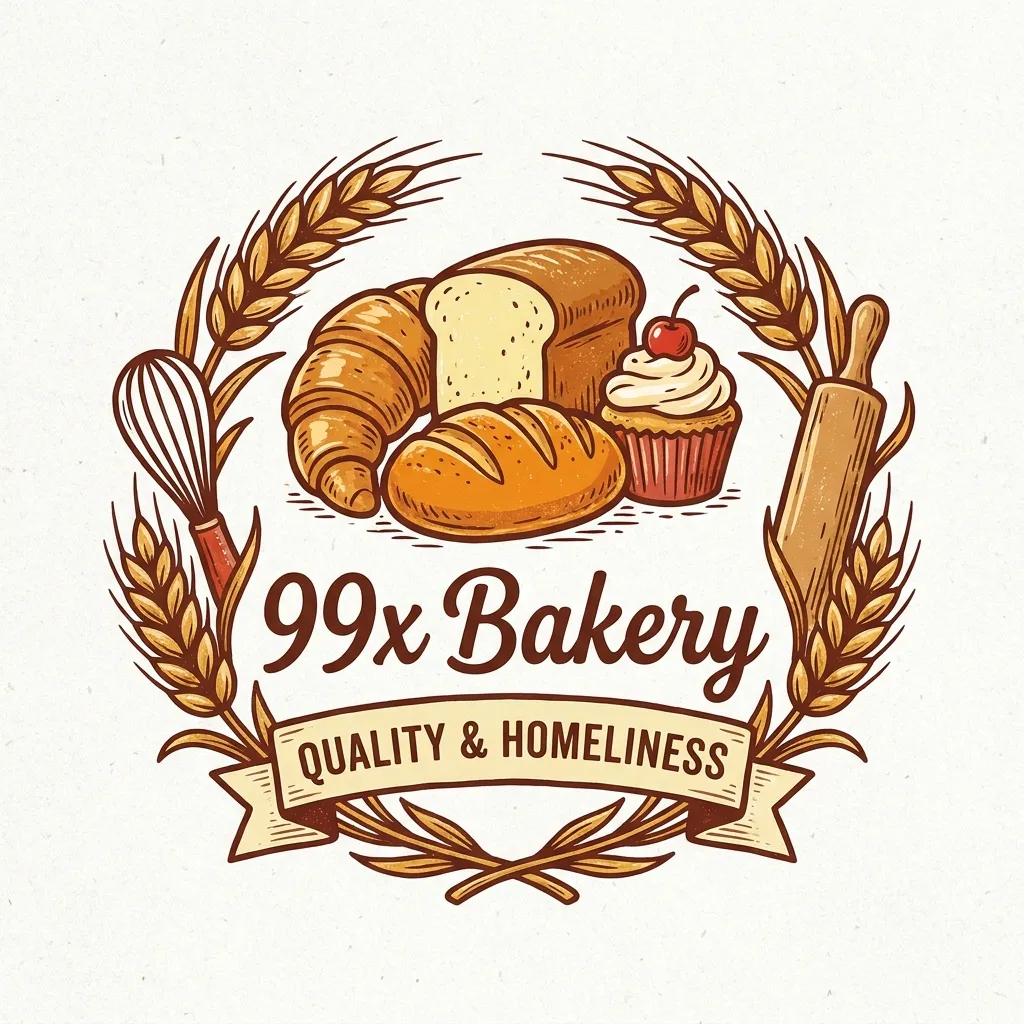
"“Design a charming, delicious-looking logo for a bakery known for [insert produce names], incorporating baked goods imagery and warm, inviting colors. The logo should convey quality and homeliness, and be perfect for shop signage, packaging and marketing materials.”"
7. Professional fashion/lifestyle brand logo
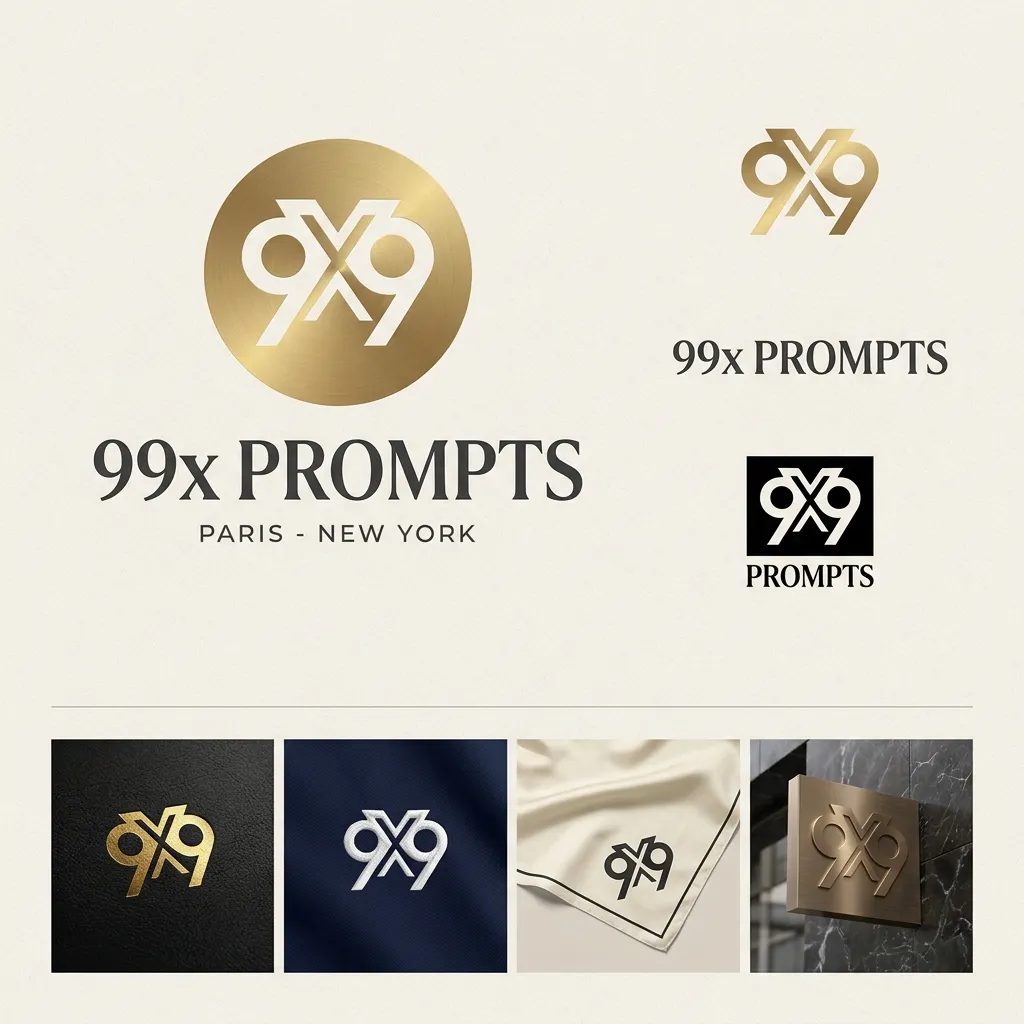
"Create a high-end, iconic, professional fashion/lifestyle brand logo for the product/brand name:
"[PRODUCT NAME]"
Use the uploaded reference image ONLY as visual inspiration for the overall premium fashion-logo aesthetic, not as something to copy.
BRANDING DIRECTION
Design an original logo that feels comparable in quality and sophistication to established luxury and premium fashion brands. The identity should communicate:
Luxury
Elegance
Confidence
Timelessness
Premium craftsmanship
Strong brand recognition
Modern fashion
International appeal
Minimalism
LOGO STRUCTURE
Create a distinctive, original brand symbol + wordmark system.
The symbol should be:
Simple
Memorable
Geometrically refined
Unique to "[PRODUCT NAME]"
Visually recognizable even without the text
Suitable for clothing labels, packaging, websites, apps, storefronts, embroidery and social media
The wordmark should use beautiful, premium typography with carefully designed letter spacing and proportions.
Explore typography inspired by premium branding characteristics such as:
Elegant high-contrast serif
Refined modern serif
Sophisticated geometric sans-serif
Minimal luxury sans-serif
Custom fashion-style lettering
Do NOT simply type the brand name in a generic font. Make the typography feel intentionally designed as a custom identity.
VISUAL STYLE
Aim for the visual quality of a professional international fashion-house identity.
Use:
Strong negative space
Precise geometry
Balanced proportions
Sophisticated alignment
Clean silhouettes
Excellent kerning
Premium visual hierarchy
Minimal visual noise
Strong scalability
The result should look expensive, established, sophisticated and instantly recognizable.
COLOR DIRECTION
Create a sophisticated primary version using a restrained luxury palette such as:
Black + white
Deep navy + white
Black + champagne gold
Burgundy + ivory
Deep forest green + cream
Charcoal + silver
Choose the palette that best matches the personality of "[PRODUCT NAME]".
Avoid excessive gradients, excessive colors, neon colors, unnecessary effects or cheap-looking visual treatments.
SYMBOL CREATION
Develop the symbol from an abstract interpretation of the brand name, initials, product category, concept or core brand value.
Possible design approaches:
Clever negative space
Interlocking geometry
Monogram
Abstract letterform
Symmetrical symbol
Minimal emblem
Hidden letter
Elegant geometric transformation
The symbol must be original and ownable, not a recreation or modification of an existing famous logo.
PRESENTATION
Show the final logo centered on a clean background.
Create:
1. Primary logo
2. Symbol/icon alone
3. Wordmark alone
4. Black-and-white version
5. Premium presentation version
Keep everything extremely clean and professionally aligned.
QUALITY REQUIREMENTS
The final result should look like it was created by an elite branding agency specializing in luxury fashion and premium consumer brands.
It must be:
Vector-like
Crisp
Symmetrical where appropriate
Highly legible
Professionally proportioned
Reproducible at small sizes
Suitable for embroidery and printing
Suitable for website/app/favicon use
Suitable for packaging and physical products
IMPORTANT RESTRICTIONS
Do NOT reproduce, imitate, trace, remix or closely resemble any existing brand logo.
Do NOT use recognizable logos, symbols, typography, slogans or trade dress belonging to brands such as Chanel, Nike, Cartier, Gucci, Prada, Hermès, Calvin Klein, Ray-Ban, Tommy Hilfiger, Lacoste or other existing brands.
The uploaded reference is only for understanding premium logo composition, sophistication, spacing, contrast and presentation quality.
Create a completely new and original identity specifically for "[PRODUCT NAME]".
FINAL CREATIVE GOAL
The logo should make someone think:
"This looks like a major premium brand."
It should feel simple at first glance, but distinctive enough to become an iconic identity over time."
8. The Comprehensive Design Strategy Architect
Claude 3.5 Sonnet"Act as a world-class Design expert. Based on the topic "Overcoming Creative Block in Graphic Design", formulate a step-by-step master plan with actionable frameworks, risk mitigations, and industry best practices for high-impact execution."
9. Design Automated Workflow & Blueprint
GPT-4o"Design a standardized, repeatable operating system for Design. Include required inputs, transformation steps, quality assurance checkpoints, and output templates."
10. High-Impact Problem Diagnoser for Design
Claude 3.5 Sonnet"Here is a challenging scenario in Design:
[Describe Situation/Obstacle]
Analyze why this issue occurs, identify the hidden bottleneck, and provide a 3-step immediate action plan to resolve it with measurable KPIs."